A developed life sciences ecosystem attracts investment
ITA also reports that Italy has six sciences parks and 12 dedicated life sciences centres of excellence. Moreover, there are over 50 universities in Italy offering programmes related to the life science field, creating a rich source of skilled workers, spin out companies, and innovative products. In 2021, the health and life sciences sector in Italy was the fifth most popular sector for VC investment, according to EY’s Venture Capital Barometer 2021 – Italy. The top five sectors in order were: 1. Foodtech: €261 million raised, 2. Fintech: €255 million raised, 3. Energy: €164 million raised, 4. Proptech: €147 million raised, 5. Health & Life Sciences: €99 million raised. Foodtech, fintech, energy, proptech, and health & life sciences accounted for about 75 percent of total inflows for the year. However, note that in 2020 life sciences was the most favoured sector for VC investment, making up 37.6 per cent of the total.Example of a start-up funded in 2021
PatchAi is a digital healthtech start-up that champions patient engagement. The app assists patients in completing study tasks, reporting clinical events, and collecting data. Its web platform allows clinicians and sponsors to monitor this data and improve the patient experience. All of this takes place via real-time data collection. The company raised €1.7 million (£0.9 million) in its Seed round in January 2021. As the country’s business capital, Milan hosts the main venture capital and investment firms in Italy, as well as public institutional investors.Life sciences in Lombardy
About one-sixth of the Italian population (approximately 10 million people) live in Lombardy and of those approximately 1.4 million live in Milan. Lombardy makes up around 30 per cent of national revenues and 20 per cent of total employment in the life sciences sector. Enel, the energy utility, and Symbola, the Italian quality mark, report that there are more than 80 life science centres of excellence located in Lombardy.The list below focuses on the most prominent ones: Istituto Nazionale dei Tumori di Milano: among the best cancer treatment centres at a global level. Thanks to its 550 researchers and 27 laboratories, in 2019 around 70,000 patients had access to clinical trials and research protocol. Istituto Neurologico "Carlo Besta" | Fondazione IRCCS: the institute has 240 operating researchers and conducts research and treatment activities in the biomedical field of neurosciences. Besta Institute is ranked 6th in the world in the 2021 Newsweek list of the best centres specialised in neurology. Istituto Clinico Humanitas: one the most digitally advanced hospitals in the world, Humanitas it is dedicated to research in the immunologic field. Istituto Europeo di Oncologia: ranked 11th worldwide, the institute is first-class in cancer research and hosts the School of Robotic Surgery. Istituto FIRC di Oncologia Molecolare: with a staff of around 300 researchers, the institute has been conducting many research lines on subjects such as the migration of cancer cells, genomics of cancers, and the DNA metabolism. Ospedale San Raffaele: a university hospital with more than 50 medical specialties that was recently ranked 6th in the world by Newsweek for endocrinology (hormone-related medicine). Leading companies in the region include: 1. Genenta Science - founded in 2014 as a spin-off of the San Raffaele Hospital in Milan to develop innovative cancer gene therapies. 2. Italfarmaco Group - with 3,000 employees, Italfarmaco is a multinational company known for its specialisation in the research in the cardiovascular field, oncological and immunologic diseases, and rare diseases. 3. Zambon - working on the development and production of pharmaceuticals for rare diseases, neurologic disorders and severe respiratory diseases.Focus on Milan
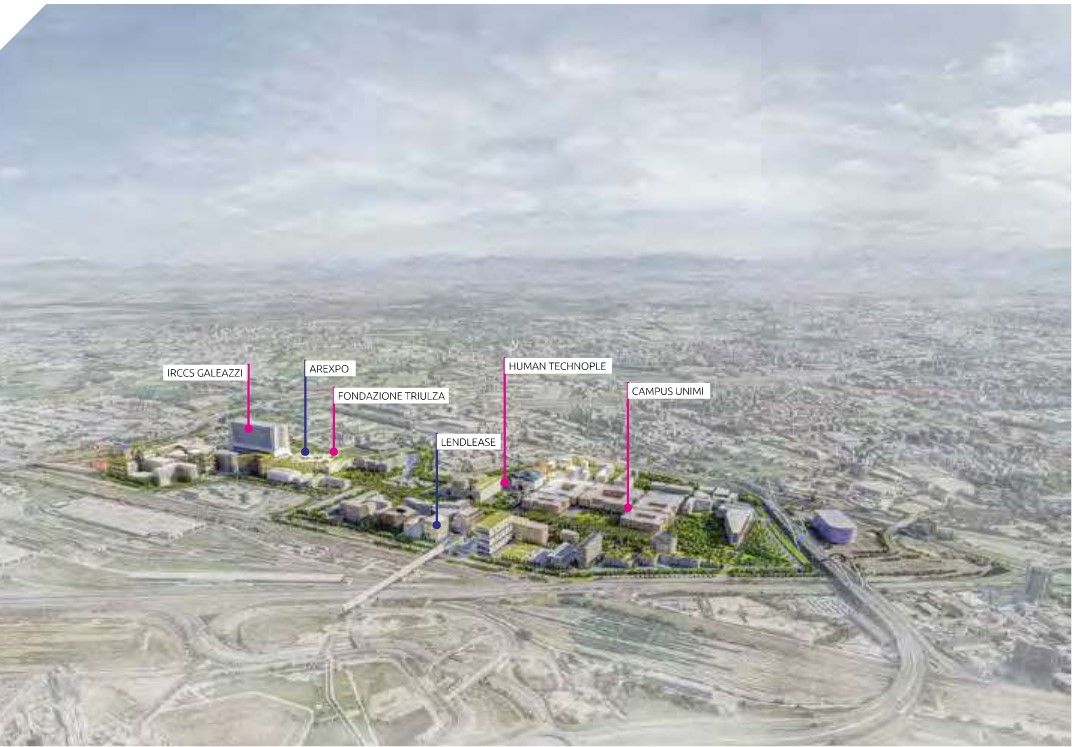
Milan is a major European centre for pharmaceutical and medical device clinical trials, with a particular focus on rare diseases, orphan drugs, and a strong pipeline of drug candidates. Around 1/3 of all clinical experiments conducted in Italy take place in the Milan region. The city boasts a rich network of academia, research organisations, national and international regulators, and complementary industries, which provide a unique breeding ground for science, research, and innovation. Overall, the Milan region boasts 11 top-ranked universities, around 350,000 life sciences employees, 130,000 skilled healthcare workers and 17 advanced research hospitals (IRCCS). Milan is already home to over 250 biotech companies, life science trade bodies such as Assobiotec, the Italian Association for the Development of Biotechnology, and Human Technopole, Italy’s new research institute for Genomics and Computational Biology based at MIND (Milano Innovation District).Precision medicine
Milan is also a booming centre for precision medicine, with a large representation of research hospitals, corporations, and start-ups acting in this field. Lombardy’s regional government is a prominent partner of a national research program for the development of advanced cancer therapies, along local hospitals involved in international research programs such as the European consortium EURE-CART. The European Institute of Oncology in Milan is ranked 11th worldwide for cancer research.Food science
It should be also added that Italy’s functional foods market is the largest in Europe and the country ranks second worldwide (after the US) in scientific production applied to nutraceuticals. Milan is a hub for Italy’s agri-foods industry, and particularly functional foods, which is renowned for its quality and innovation features. In 2018, Milan’s ALISEI National Technological Cluster for Life Sciences partnered with the National Technological Agri Food Cluster, C.L.A.N., to support research and technology transfer in areas such as nutraceutical, nutritional and functional foods. Milan is also home to the Centre for Nano Science and Technology and to the Centre for Genomic Science, which applies modern genomic technologies to understand complex biological processes and diseases, with particular emphasis on cancer.Location of life sciences companies in Milan
Life sciences companies in the Milan region are scattered around the city itself and its hinter land,with no single focal point. This configuration is influenced by proximity to the main motorways.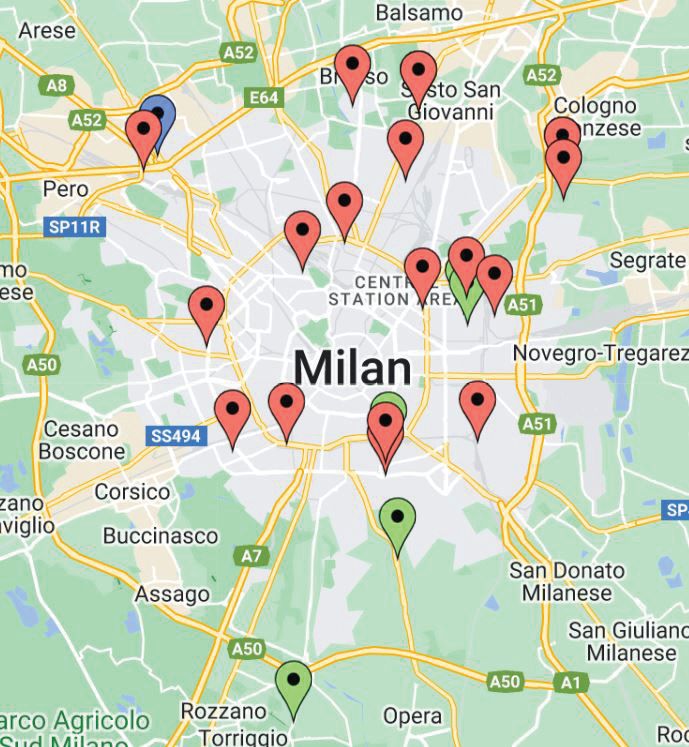
MIND
Milan Innovation District (MIND) deserves a special mention. It is an ambitious 100-hectare (247-acre) mixed-use redevelopment, aiming to become a world leading science, knowledge, and technology hub with an estimated development end value of €3.2 billion (£2.7 billion). Located on the premises of Milan’s World Expo 2015 and owned by Arexpo (whose members include, among others, the Italian government, the Lombardy region and the Milan municipality), aims to be one of the largest and most sustainable examples of urban regeneration in Europe on an area of more than 1 million sq m (11 million sq ft). When completed, MIND will host more than 60,000 people per day, including around 20,000 students and 5,000 researchers. A few private companies are also moving into the area, including AstraZeneca, which relocated its Italian HQ there. The development of Phase 1 of the West Gate within MIND is funded by a joint venture between Lendlease and Canada Pension Plan Investment Board (CPP Investments). The Milan Innovation District (MIND) site is about 15 km (9.3 miles) northwest of Milan city centre.